
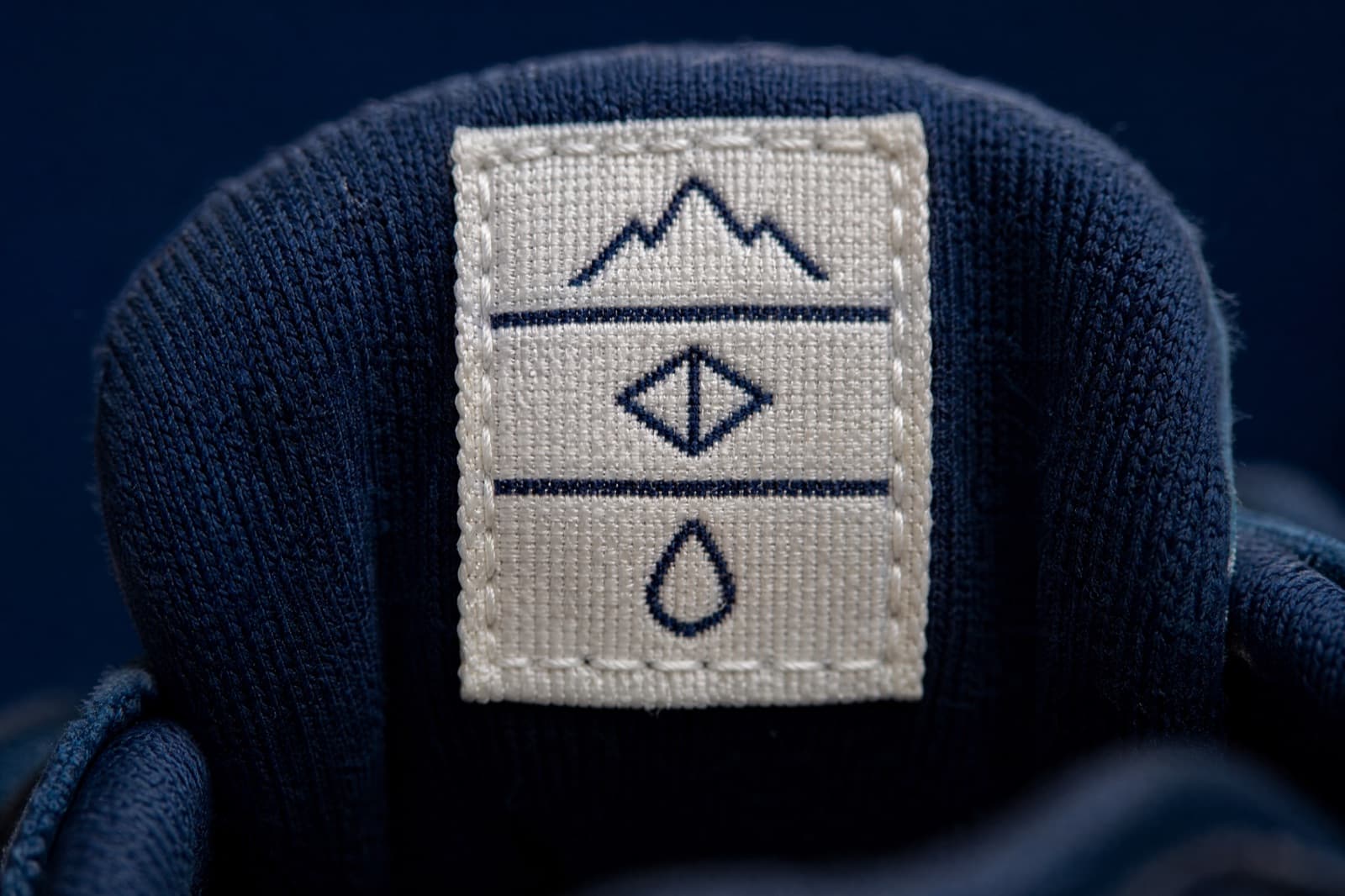
Three material rows
Upper, lining and insole, outsole. Each one named as leather, coated leather, textile or other materials, with the actual material written next to it. This is a legal label, not a marketing panel.
1 to 12 years · sized in millimetres
Then leave the millimetres we tell you to leave. Every pair here states the angle its sole bends to, what its three material rows are made of, and how much room it is built to leave in front of the toes.
We describe how our shoes are made. We don't give advice about your child's feet. If you have concerns, ask a healthcare professional.
Three steps, one number
Not a chart of ages. Not last year’s size. Six minutes on the kitchen floor and you will never guess again.
 01
01Weight on the foot. A foot under load is up to 4 mm longer than a foot in the air, and the shoe has to fit the loaded one.
 02
02The longest toe is not always the big one. Draw both lines square to the paper, not angled to the foot.
 03
03Do both feet and keep the longer number. That single number is what we size from.
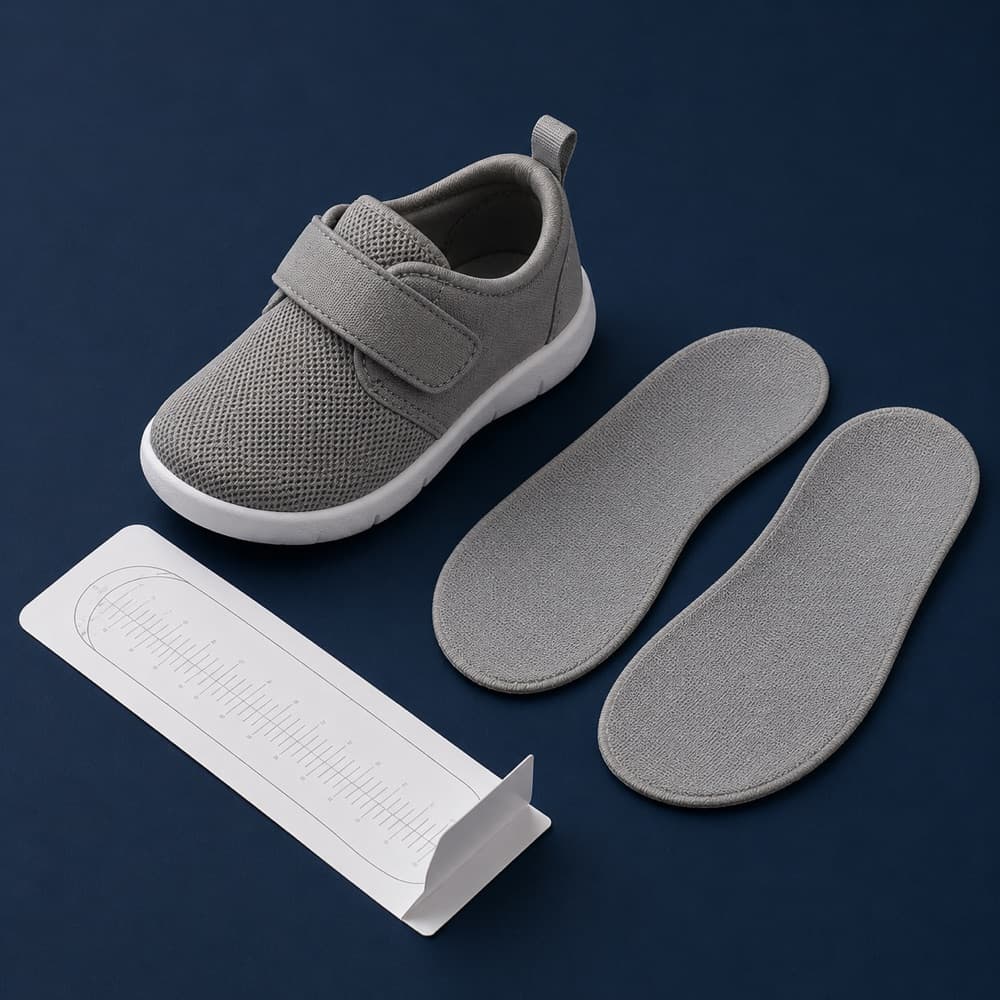
No ruler in the house? The printable paper gauge is free, and the card version comes in the post with any order.
Growing Room
It returns a size, the millimetres it leaves, a range of months rather than a promise, and a date to measure again that we will never remind you about.
Step 1 — the measurement
Measure with the child standing, weight on the foot. Measure both feet and use the longer one.
Step 2 — what we would send
Recommended size
EU 25
Room in front
12 mm
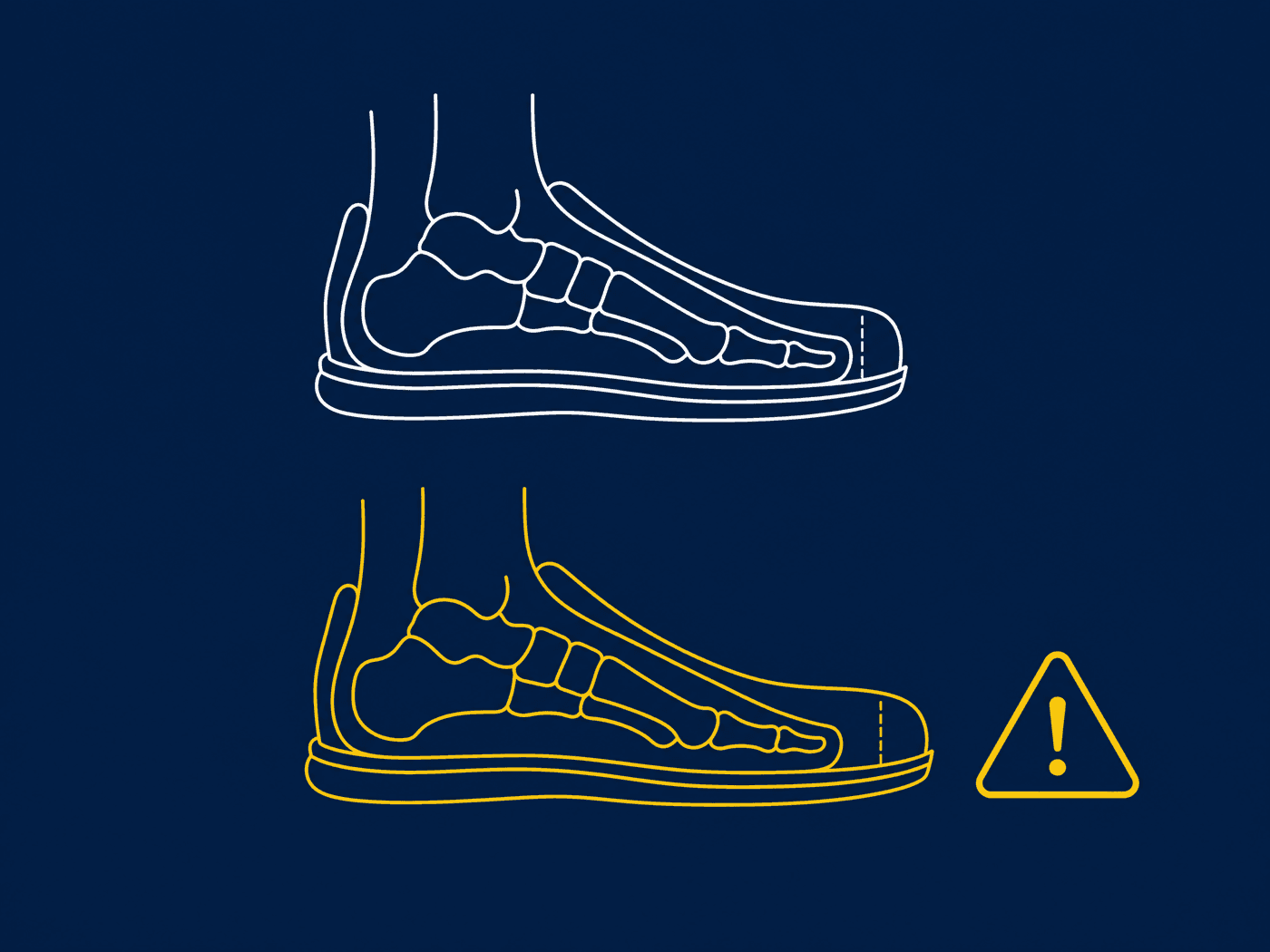
Everyday Kids shoes are built with 12 mm of allowance. 12 mm covers a normal stride plus a few months of change, without leaving enough room for the foot to slide.
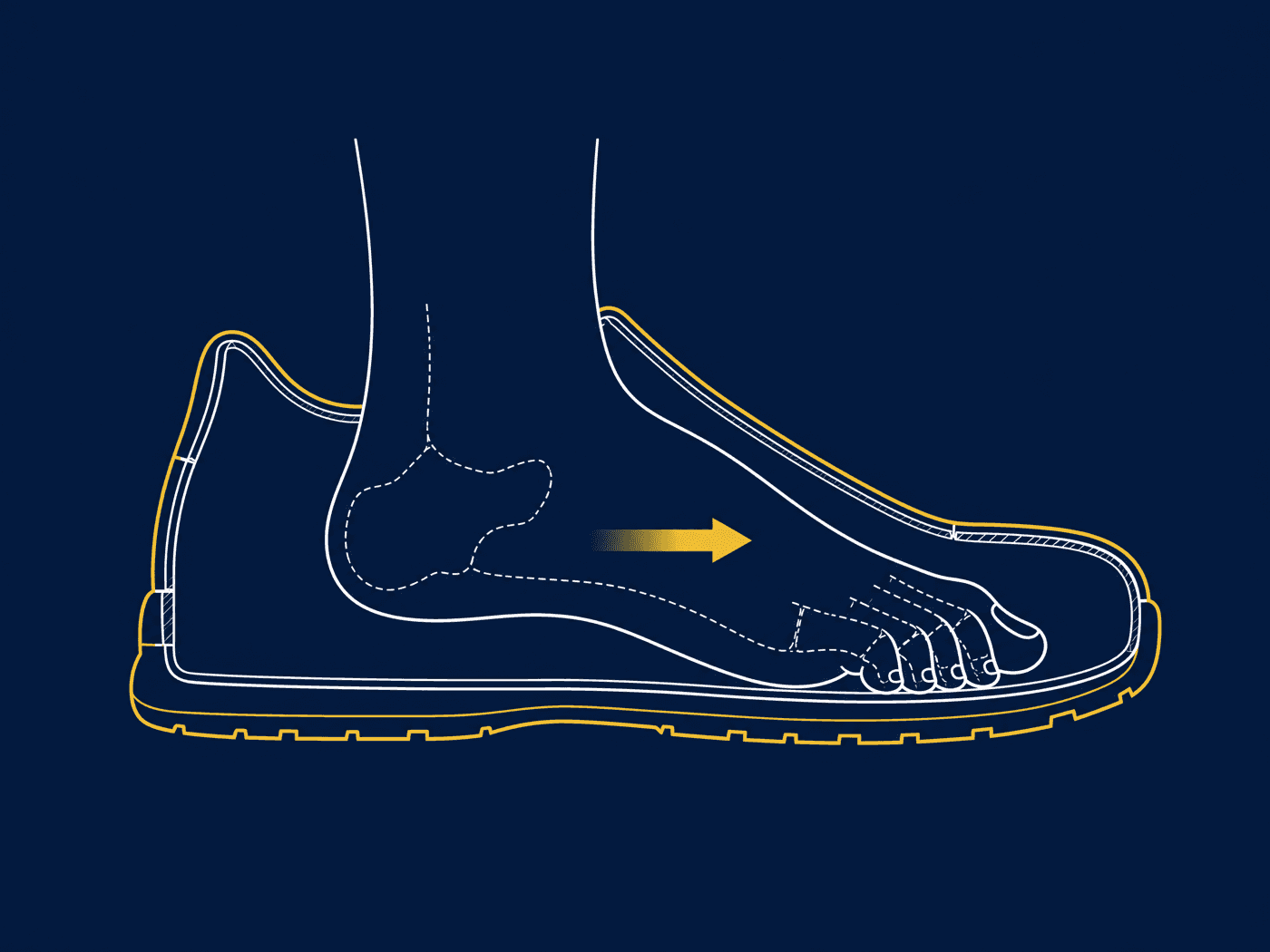
We don’t recommend more than one size above the measured fit. Too much room makes the foot slide forward and the toes grip.
The same foot across the range
A 155 mm foot is not one number. Rain boots are sized over a thick sock and sandals are worn without one, so the recommendation moves.
| Line | Allowance | Recommended | Inside length |
|---|---|---|---|
| First Walkers | +10 mm | EU 25 | 167 mm |
| Everyday Kids | +12 mm | EU 25 | 167 mm |
| School Shoes | +12 mm | EU 30 | 200 mm |
| Sandals | +8 mm | EU 25 | 167 mm |
| Rain & Winter | +14 mm | EU 26 | 173 mm |
These two numbers stay in your browser while you use this page. If you send them to us with an order we keep them for at most 12 months, use them only to pick a size, and delete them if you ask. We never use them to build a profile or to target advertising, and we never send you a reminder based on them.
Two things we will not tell you
Most children’s shoe shops are quietly pleased when you buy a size up: the pair lasts longer, you come back later, everybody is happy. We think that trade is worse than it looks, so here is the argument against our own next sale.
We don’t recommend more than one size above the measured fit.
Too much room makes the foot slide forward at every step. The heel lifts out of the back of the shoe, the toes grip to hold the shoe on, and the pair that was supposed to last longer gets worn differently instead.
We don’t suggest buying next year’s size now.
Feet don’t grow evenly, and the shape changes as well as the length. A pair bought a year ahead is a guess about a foot that does not exist yet, and that is why there is no back-to-school countdown anywhere on this site.
Six lines
Not by season, and not by what is new. Each line carries its own allowance because a rain boot over a thick sock and a bare-foot sandal are not the same problem.
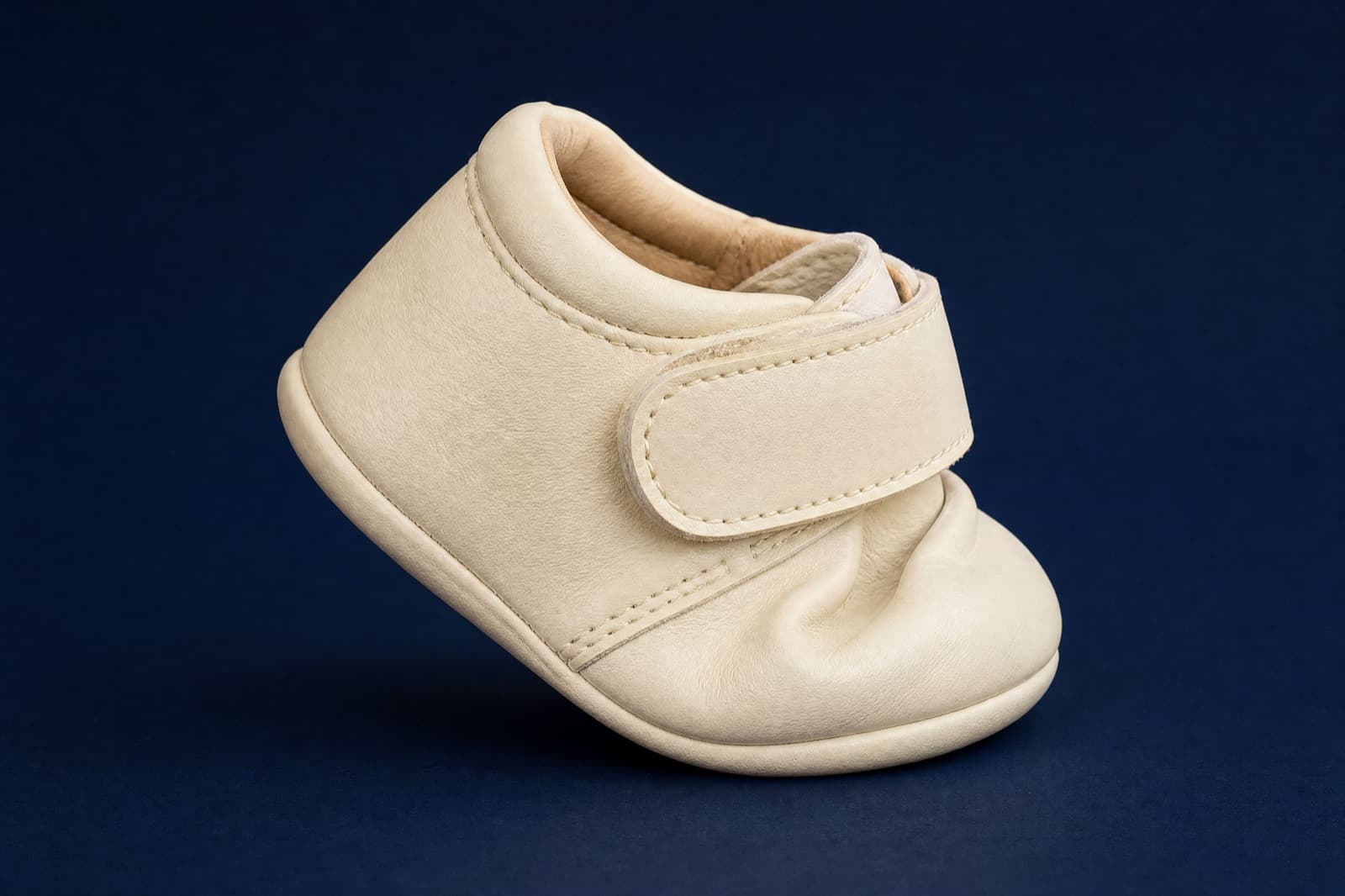
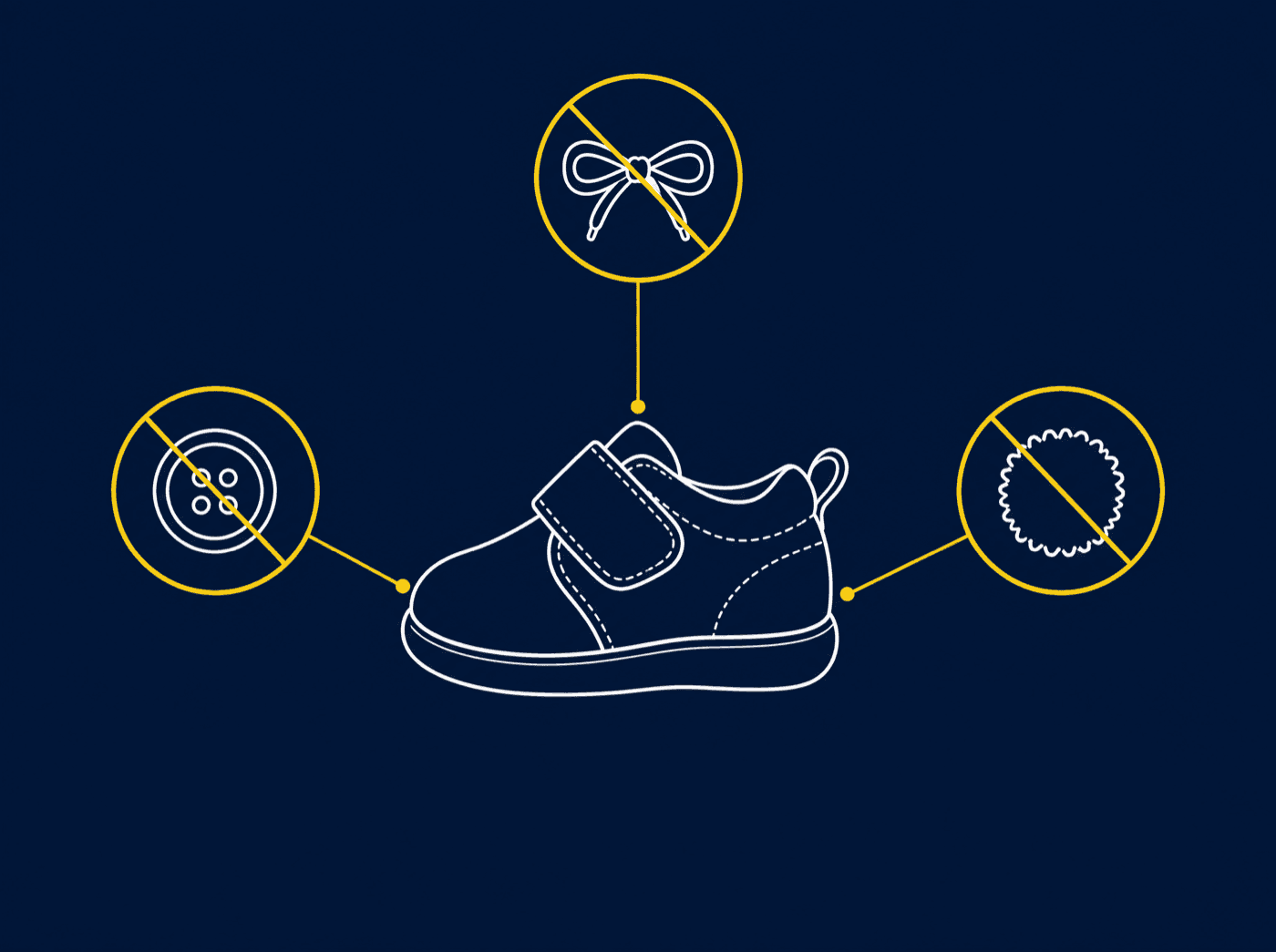
The softest soles we make, with no laces and no removable parts of any kind. Sized from a measured foot, like everything else here.
7 items · $42–$88 USD · +10 mm allowance
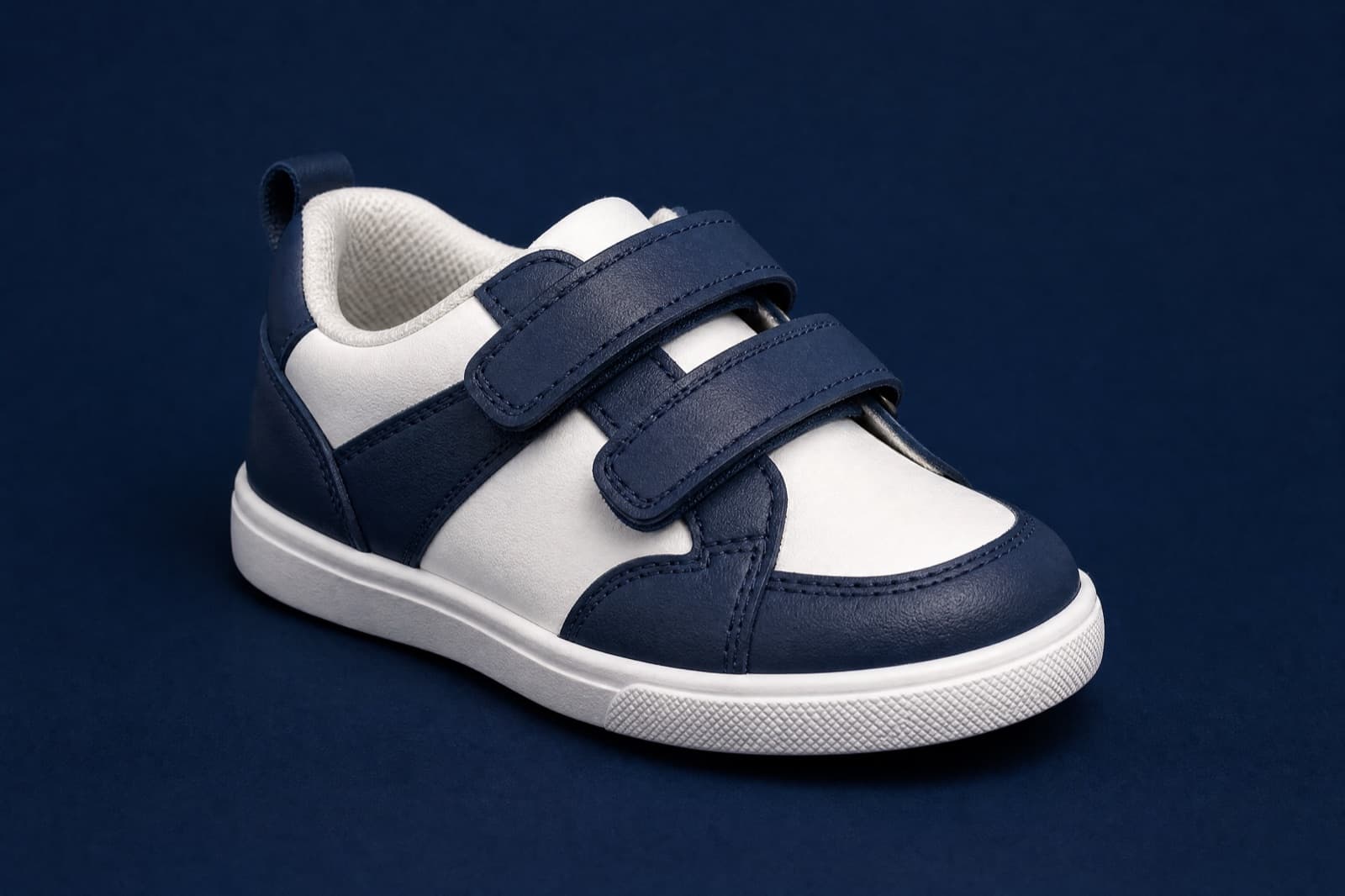
Shoes for the hours between breakfast and bath. Mostly hook-and-loop, because a child who can fasten their own shoes will.
8 items · $48–$108 USD · +12 mm allowance
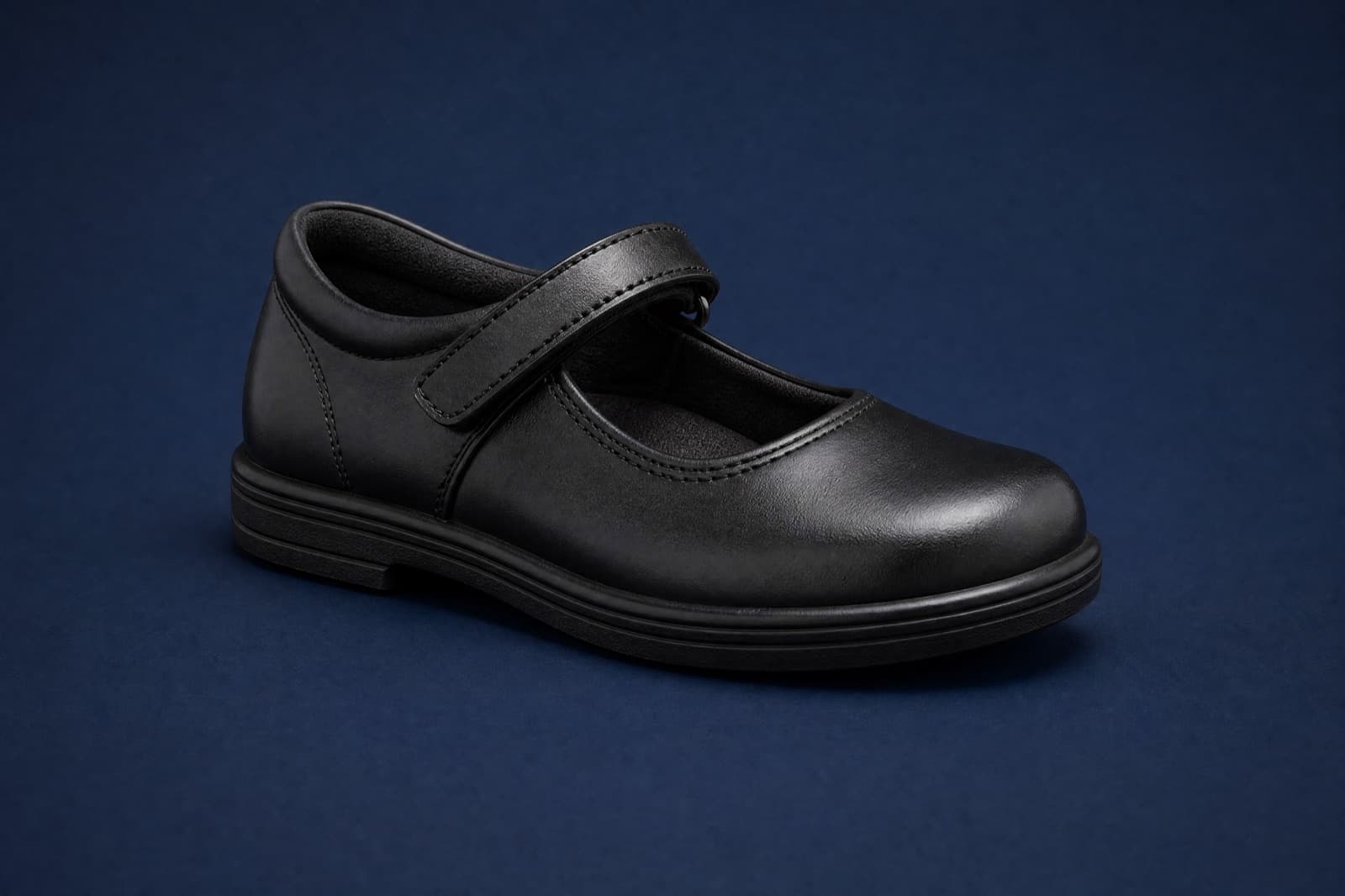
Built for five days a week on hard floors. Toe reinforcement where shoes actually wear through first.
7 items · $58–$128 USD · +12 mm allowance
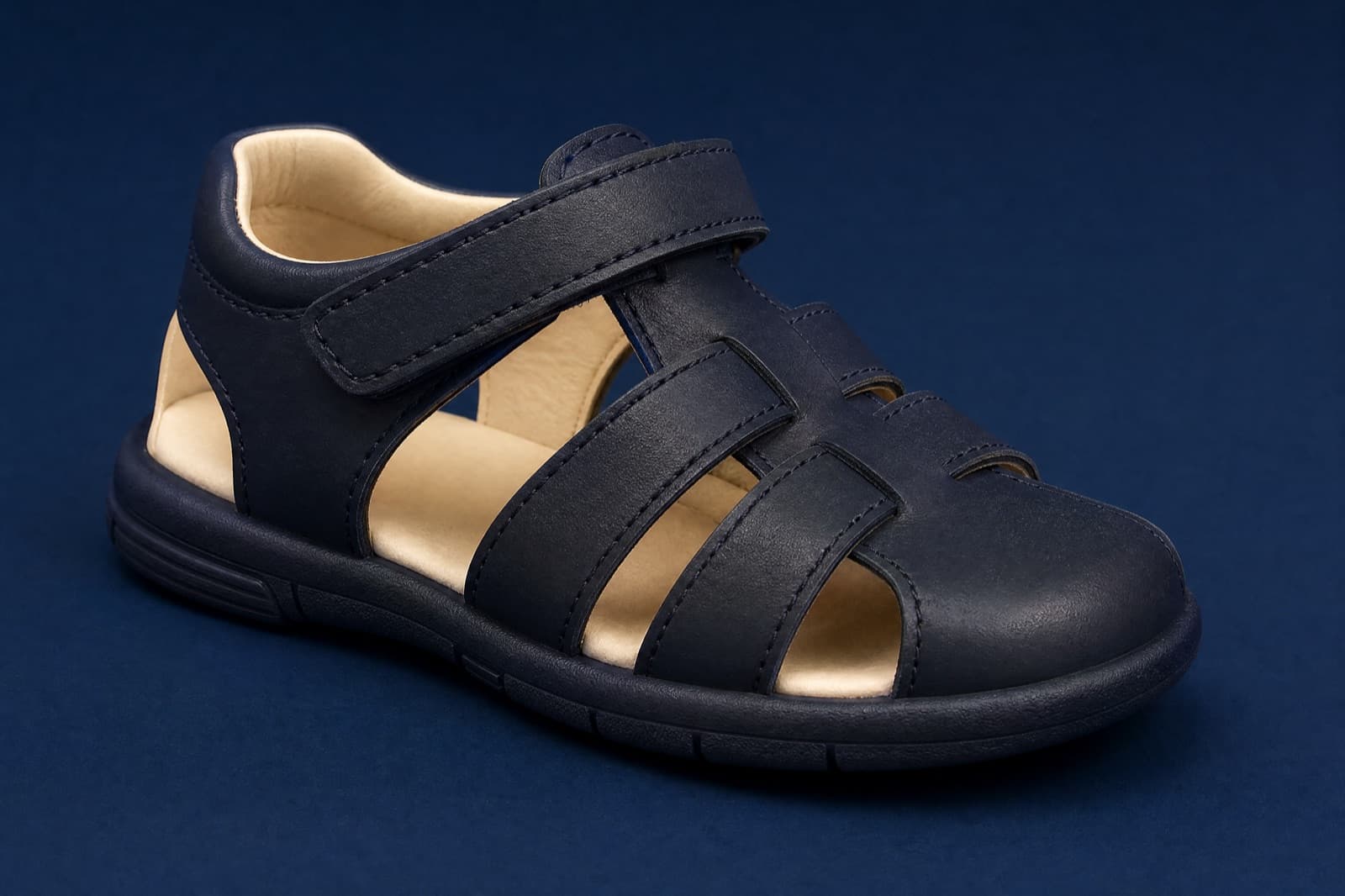
Every sandal here is closed at the toe. Open-toe sandals need a different allowance and we would rather not make that judgement for you.
6 items · $44–$92 USD · +8 mm allowance
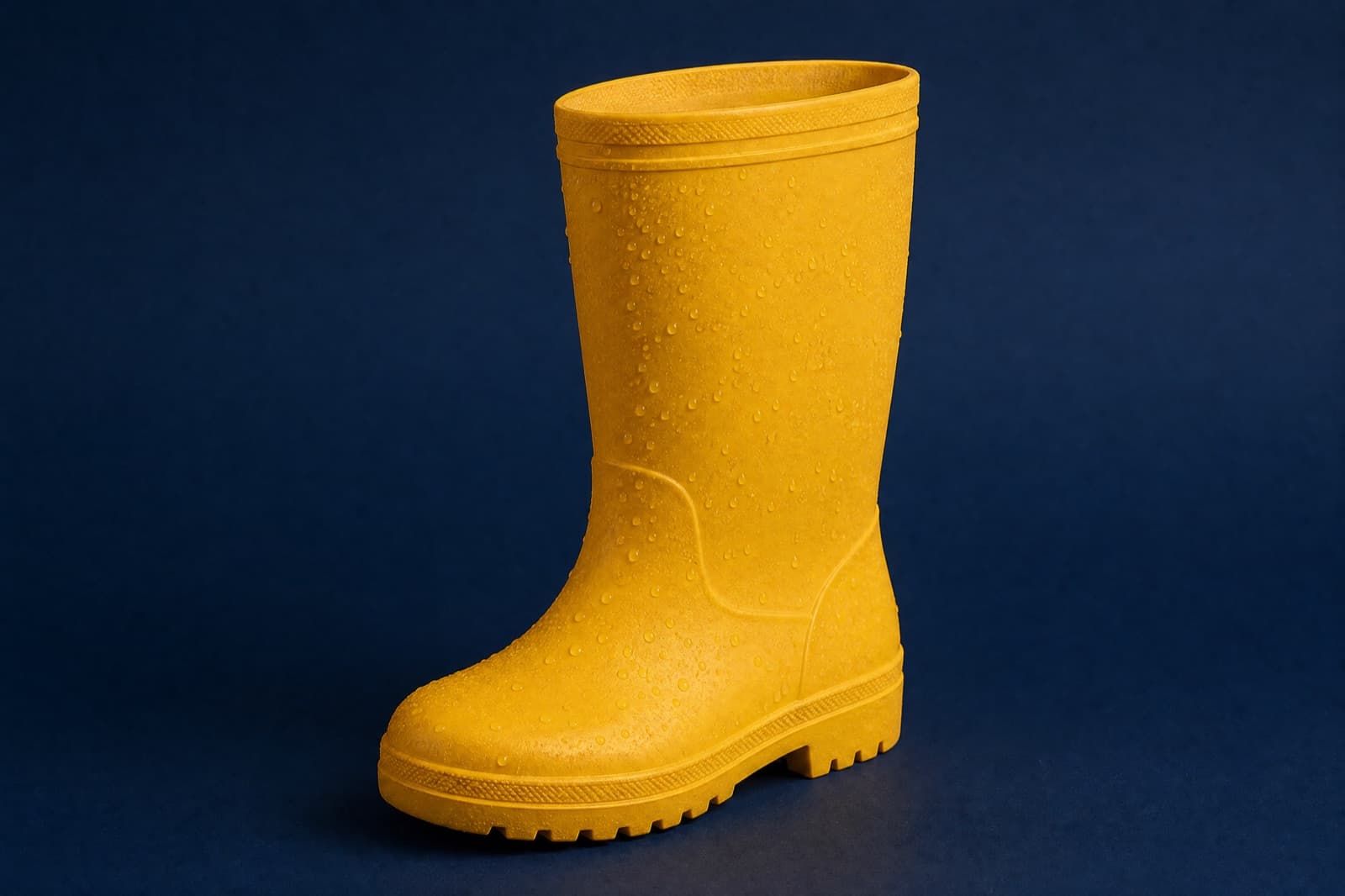
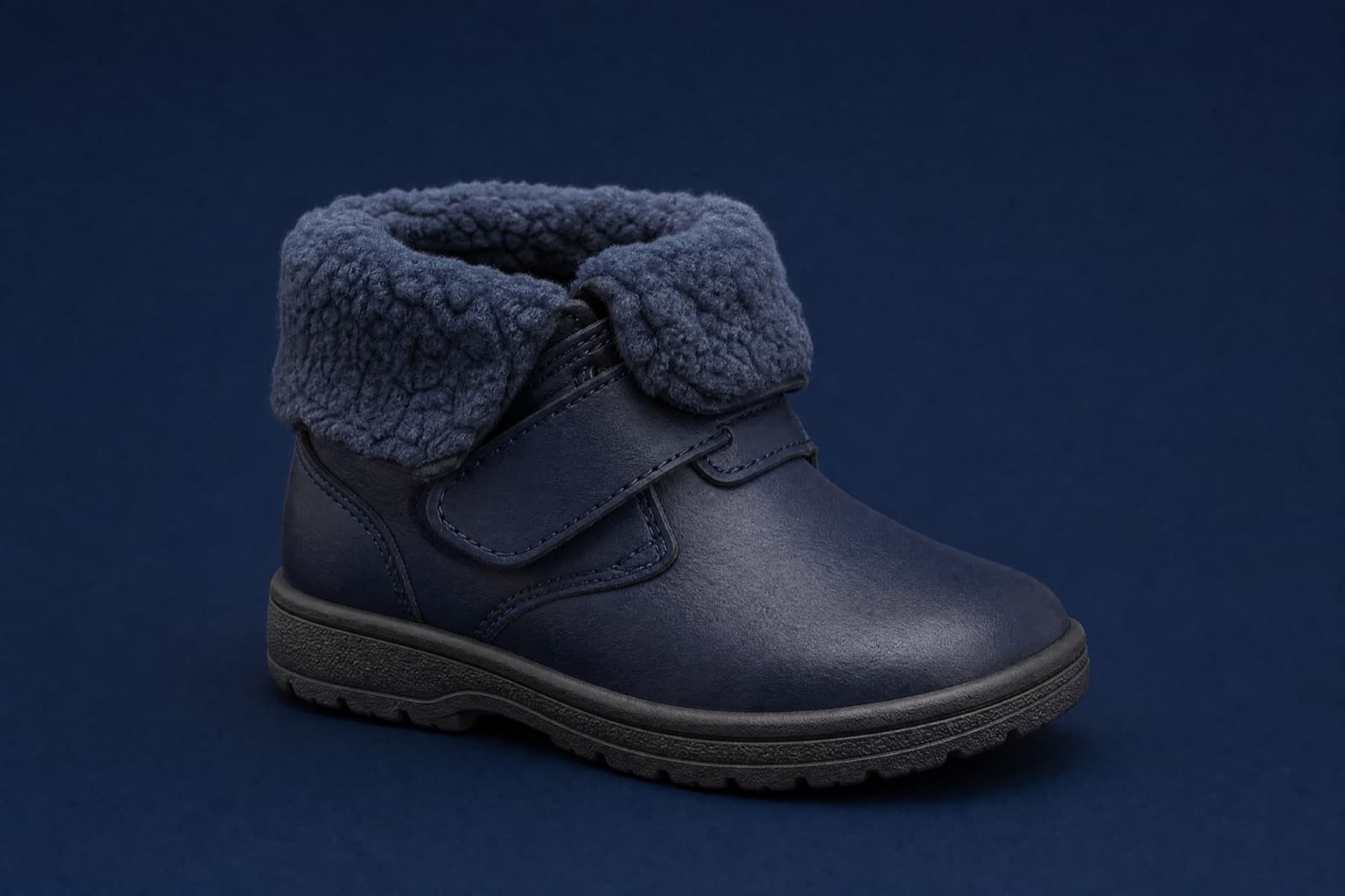
Moulded rubber and lined boots. Sized with room for a thick sock, which is the only reason the allowance is bigger here.
6 items · $52–$118 USD · +14 mm allowance
Replaceable insoles, a paper gauge for measuring at home, spare straps, cleaning, and three sets that cost less than their parts.
7 items · $8–$248 USD · +12 mm allowance
On every single product page
If any one of them is missing from a pair, our own code refuses to list it. That is a build-time rule, not a promise in a policy document.
Upper, lining and insole, outsole. Each one named as leather, coated leather, textile or other materials, with the actual material written next to it. This is a legal label, not a marketing panel.

Chromium VI, azo dyes, nickel release, phthalates, free formaldehyde. Each states the limit, the test method, and whether it applies to that pair or not.
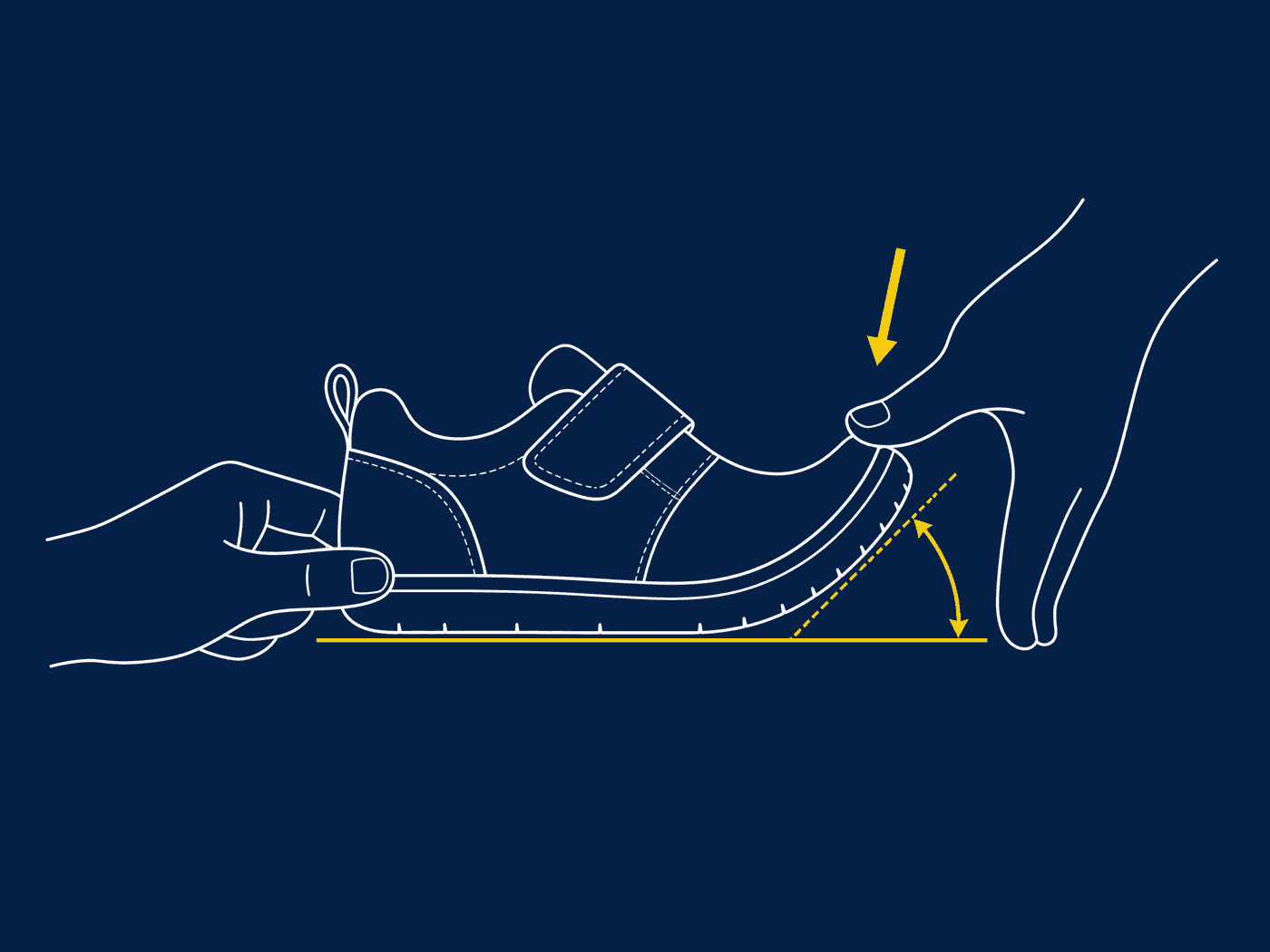
Measured by hand, the same way every time, and the method is written next to the number so you can repeat it on the pair in your hallway.
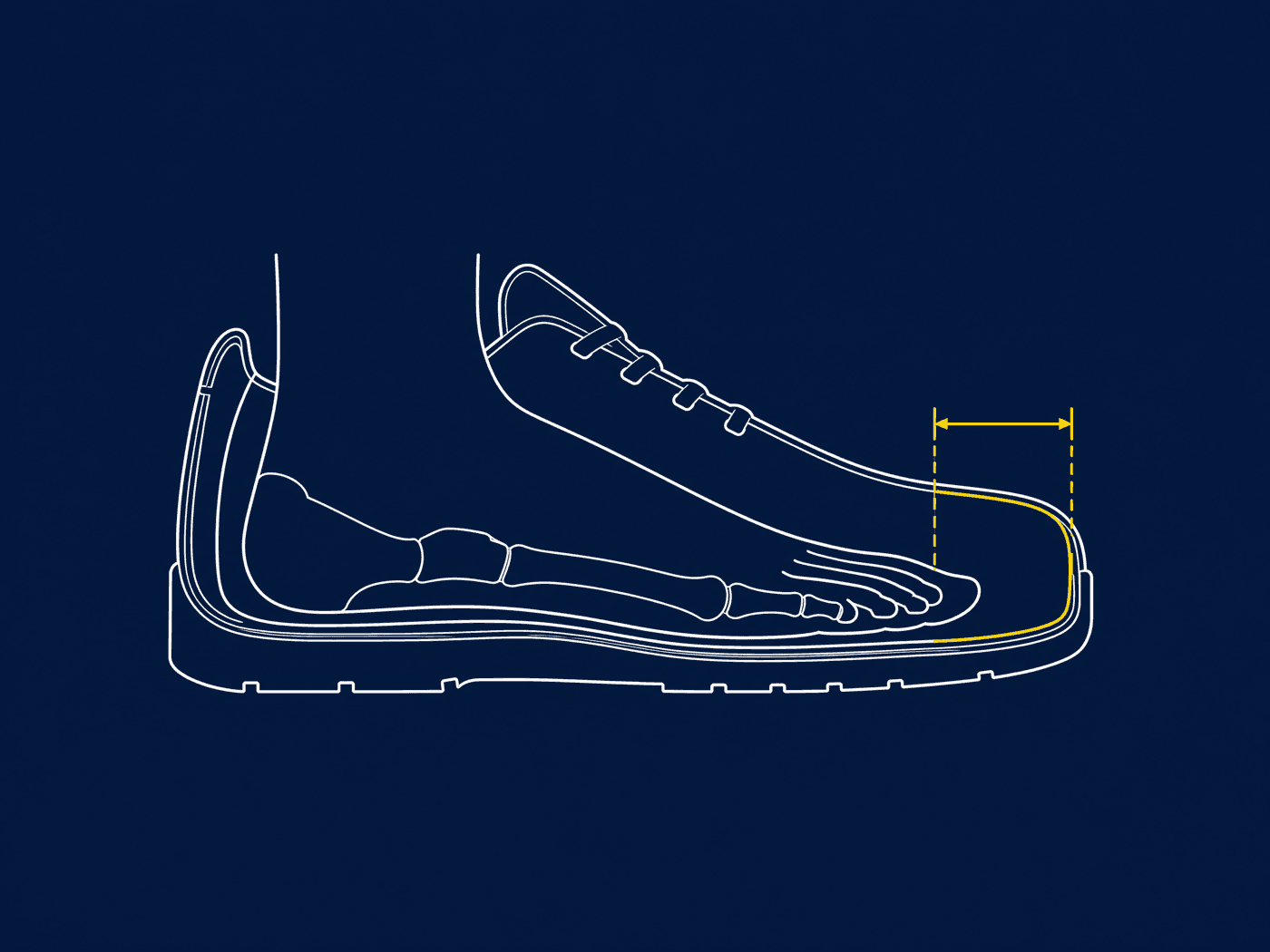
The millimetres in front of the longest toe, and a per-size table of the measured foot lengths that size actually covers.
Where the line is
We describe structure, materials and numbers. We do not tell you what any of it will do for a child’s feet, because that is not a claim a shoemaker is in a position to make. We also do not sell orthopaedic or corrective footwear of any kind.
A place to start
 A-0345° flex
First Walkers
Opens flat to the toe joint. For feet that fight the shoe.
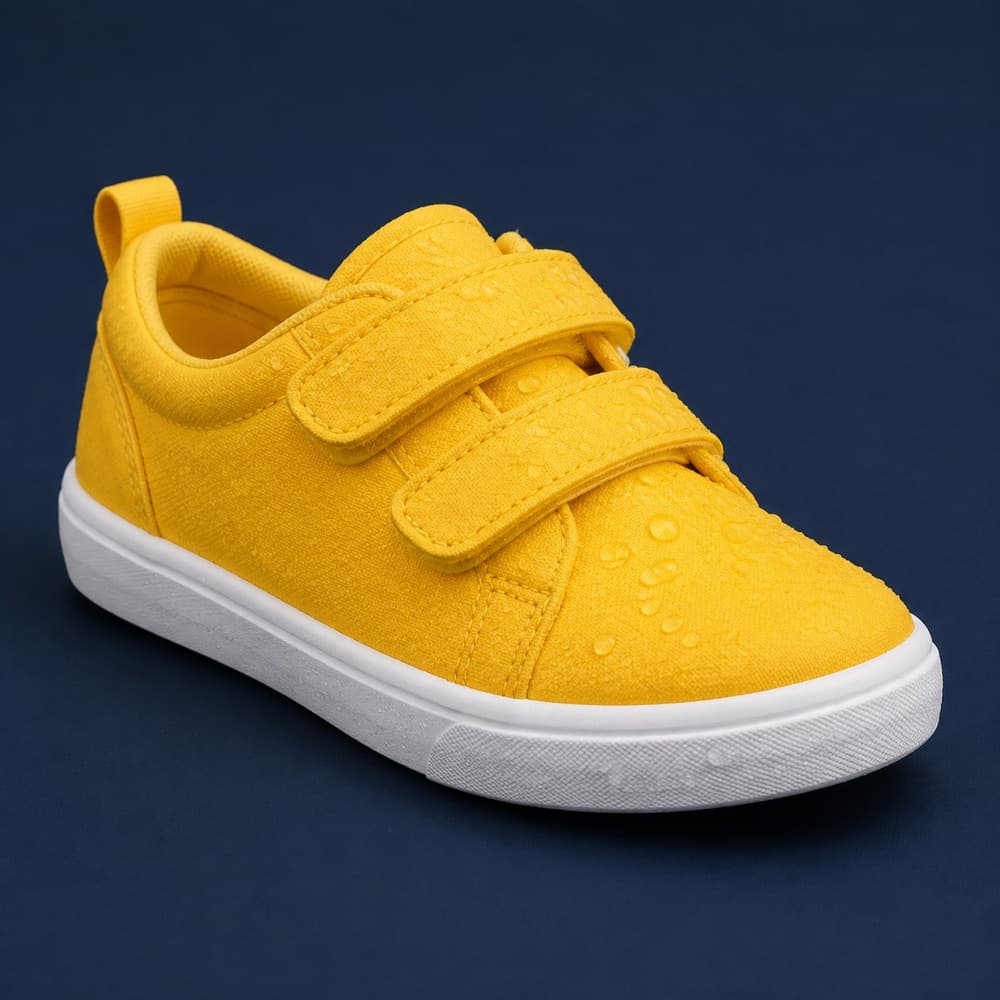 B-0740° flex
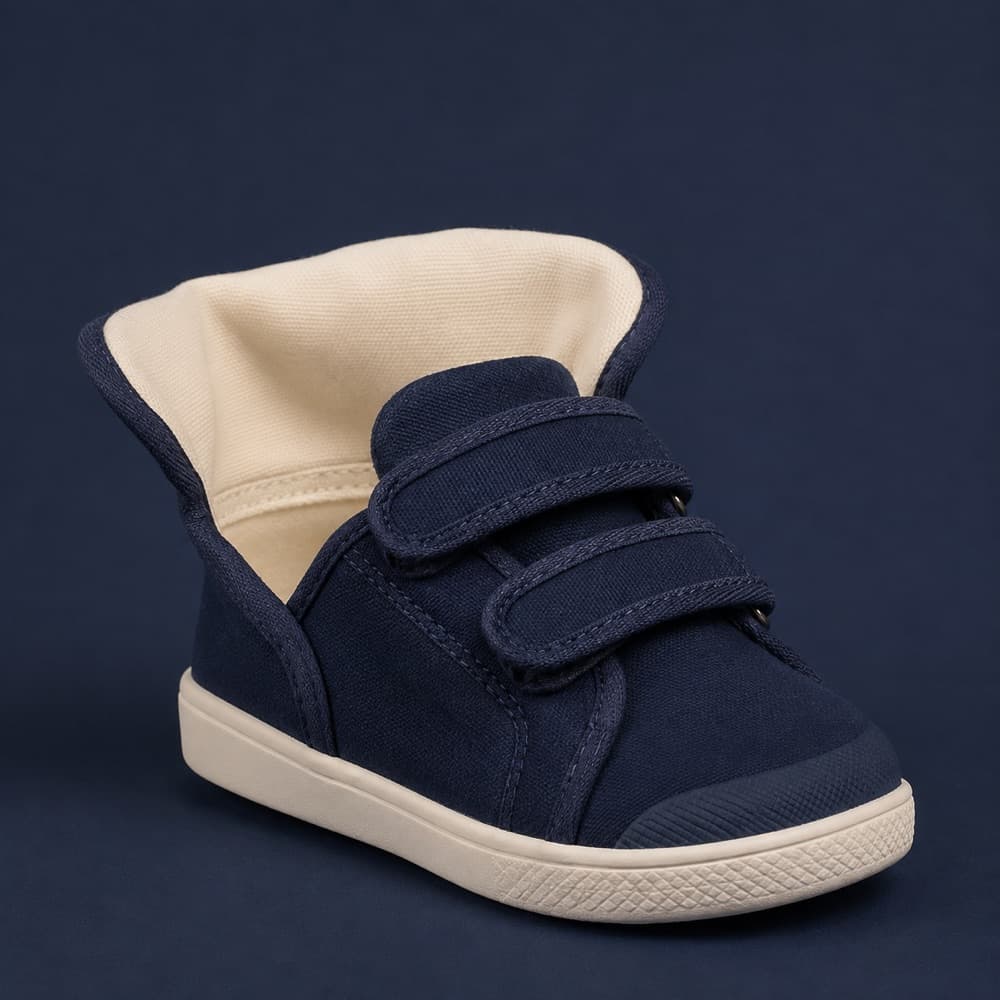
Everyday Kids
Machine wash at 30 °C, insole out.
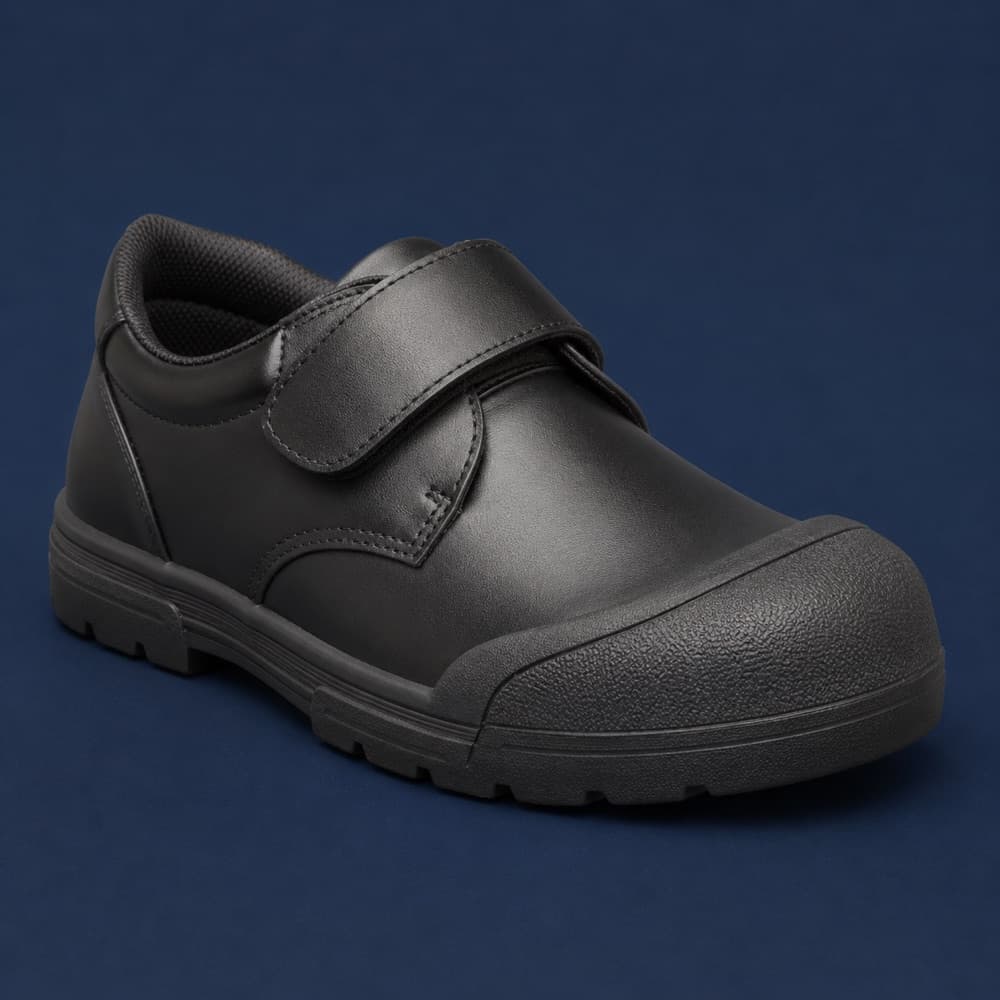 C-0335° flex
School Shoes
A 3 mm rubber layer wrapped over the toe.
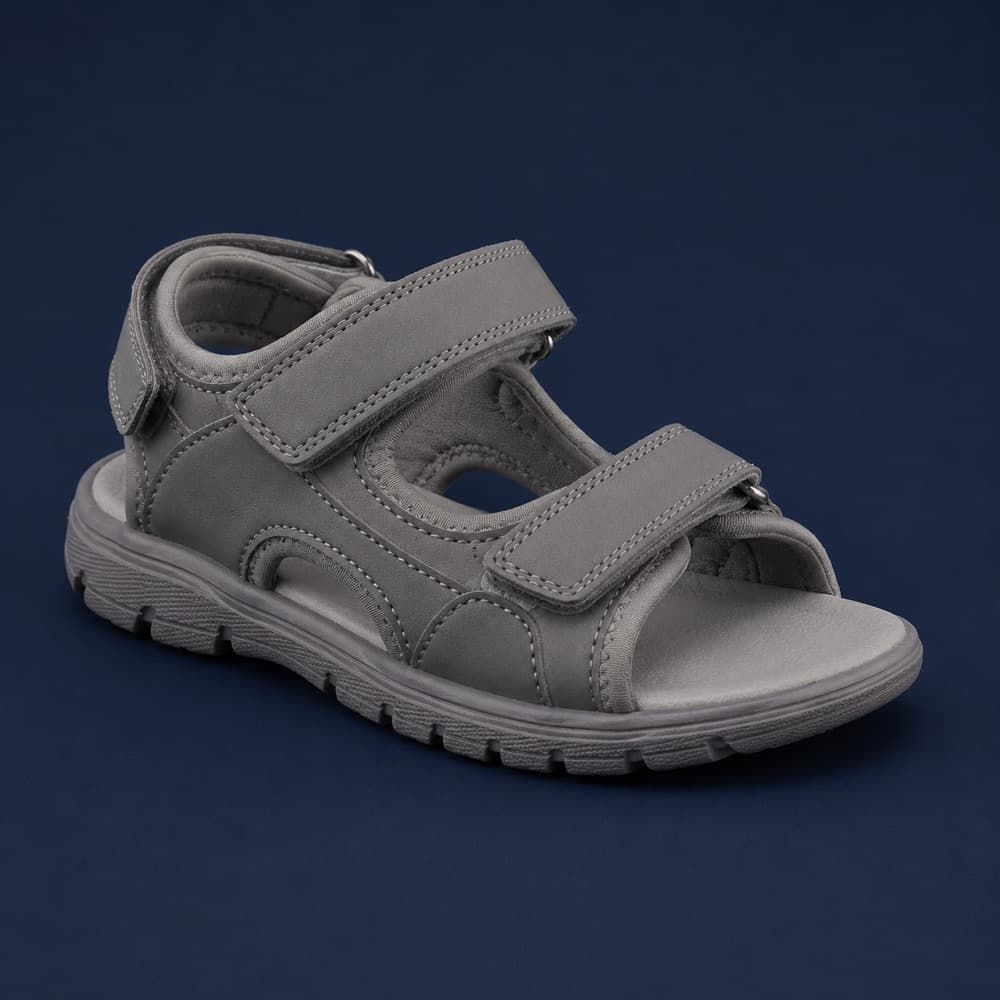 D-0240° flex
Sandals
Three straps: toe, instep, heel.
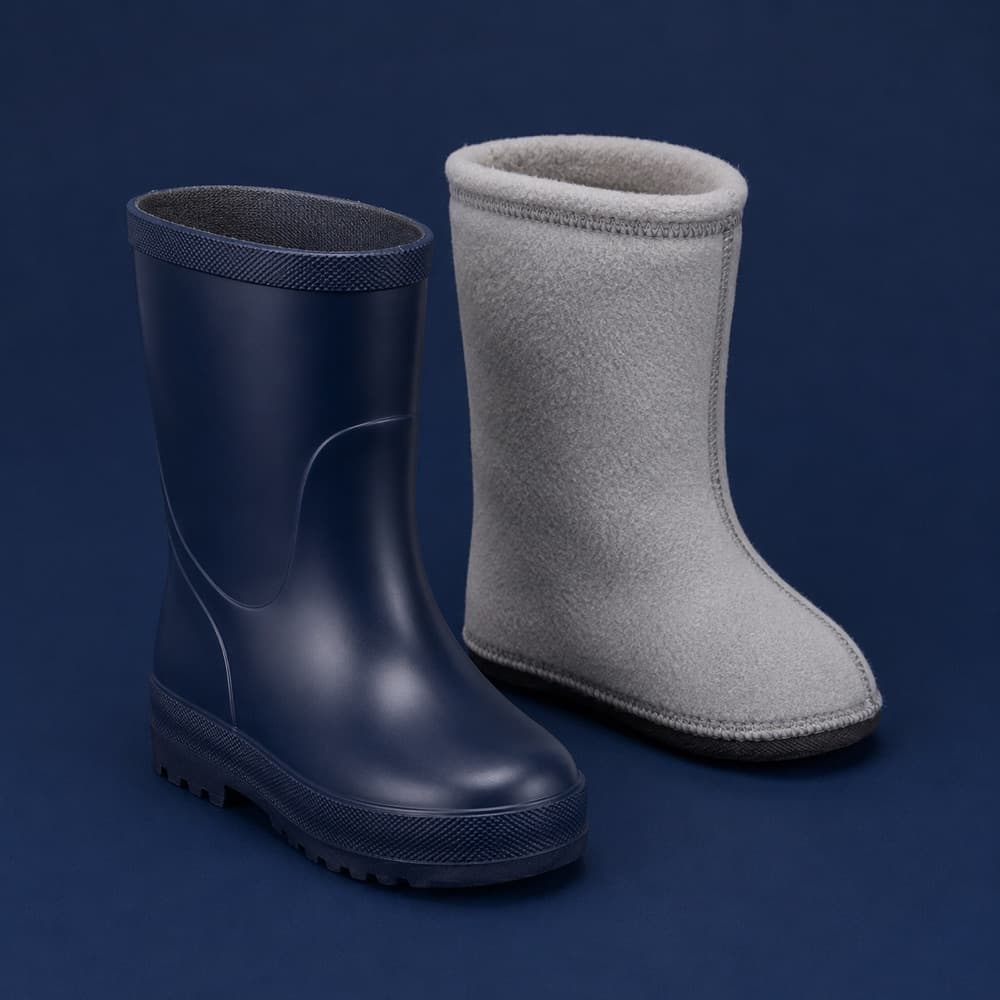 E-0335° flex
Rain & Winter
Removable fleece liner, washable at 30 °C.
 F-0545° flex
Insoles & Sets
First Flex, a pair of insoles and a gauge.
Under three years old
Everything in the First Walkers line closes with hook-and-loop or elastic, and carries no decorative button, bead, pom-pom or badge of any kind. Where a pair further up the range does carry a decorative part, it has passed a 90 N pull test held for ten seconds and it says on the page that it is not for children under three.
Nothing in this catalogue carries a cartoon, a character, a film tie-in or anybody else’s trademark. Plain shoes, every one of them.
Every price on this site is in US Dollars (USD). There is no currency switch, because there is nothing to switch to.
Terms of saleStandard shipping is $12 below that. Dispatch in 1–2 business days, and never more than 30 days to deliver.
Shipping & returnsTry them indoors on carpet. Outdoor wear on the sole is the one thing that stops a return, and we say so before you buy rather than after.
Right of withdrawalPortuguese law gives you three years on a defect. A foot that has grown is not a defect; a sole that has come away is.
Legal guaranteeNurseries and schools
Tell us the age bands and, if you have them, the foot lengths. We will come back with a size distribution rather than a catalogue, and we can supply entirely plain pairs with no pattern at all.